
Burning Smell From a Socket or Consumer Unit
This is not something to monitor, investigate yourself, or leave until tomorrow. A burning smell from any electrical accessory means heat is building somewhere it should not be. Turn off the circuit and call us.
- 1If the appliance is clearly the source: Switch it off at the socket and unplug it if it is safe to do so. Do not use the socket again until it has been inspected.
- 2Turn off the socket circuit at the consumer unit. If you are unsure which breaker controls it, turn off the main switch. This stops current flowing to the fault.
- 3Do not turn the circuit back on until a qualified electrician has inspected and cleared it. Restoring power to a burning connection risks fire.
- 4If the smell is coming from the consumer unit itself — particularly if it is accompanied by any crackling or visible discolouration — turn off the main switch and contact us immediately. Do not touch the consumer unit or try to identify the source yourself.
- 5If you can see smoke, flames, or the smell is intense: Leave the building immediately and call 999. Do not attempt to investigate. Do not use water on electrical equipment.
Emergency line: 07950 512246 — Send details by WhatsApp and we'll review urgent situations as quickly as possible.
Why a Burning Smell Is Never a Minor Issue
The smell of burning plastic or hot wire — sometimes described as a faint acrid or "electrical" smell — is heat-damaged insulation. When the PVC (or older rubber) coating on a cable or the nylon body of a socket or plug starts to heat up, it produces volatile compounds as it begins to break down. That is the smell.
The important point is this: circuit protection devices — MCBs and RCBOs — are designed to operate on overcurrent and earth leakage. They are not heat detectors. A loose terminal connection generating temperatures capable of igniting adjacent material may not produce enough extra current to trip a breaker — particularly on a lightly loaded circuit, or in older installations with rewirable fuses where the protection rating is generous. The smouldering connection continues unchecked.
This is why electrical fires in UK homes often start silently, in a wall cavity or behind a fitting, long after the initial warning sign was noticed and ignored.
A smell that cleared when the appliance was removed does not mean the socket or wiring is undamaged. Overheating can damage insulation and terminals in a way that creates a fault that will re-present under load.
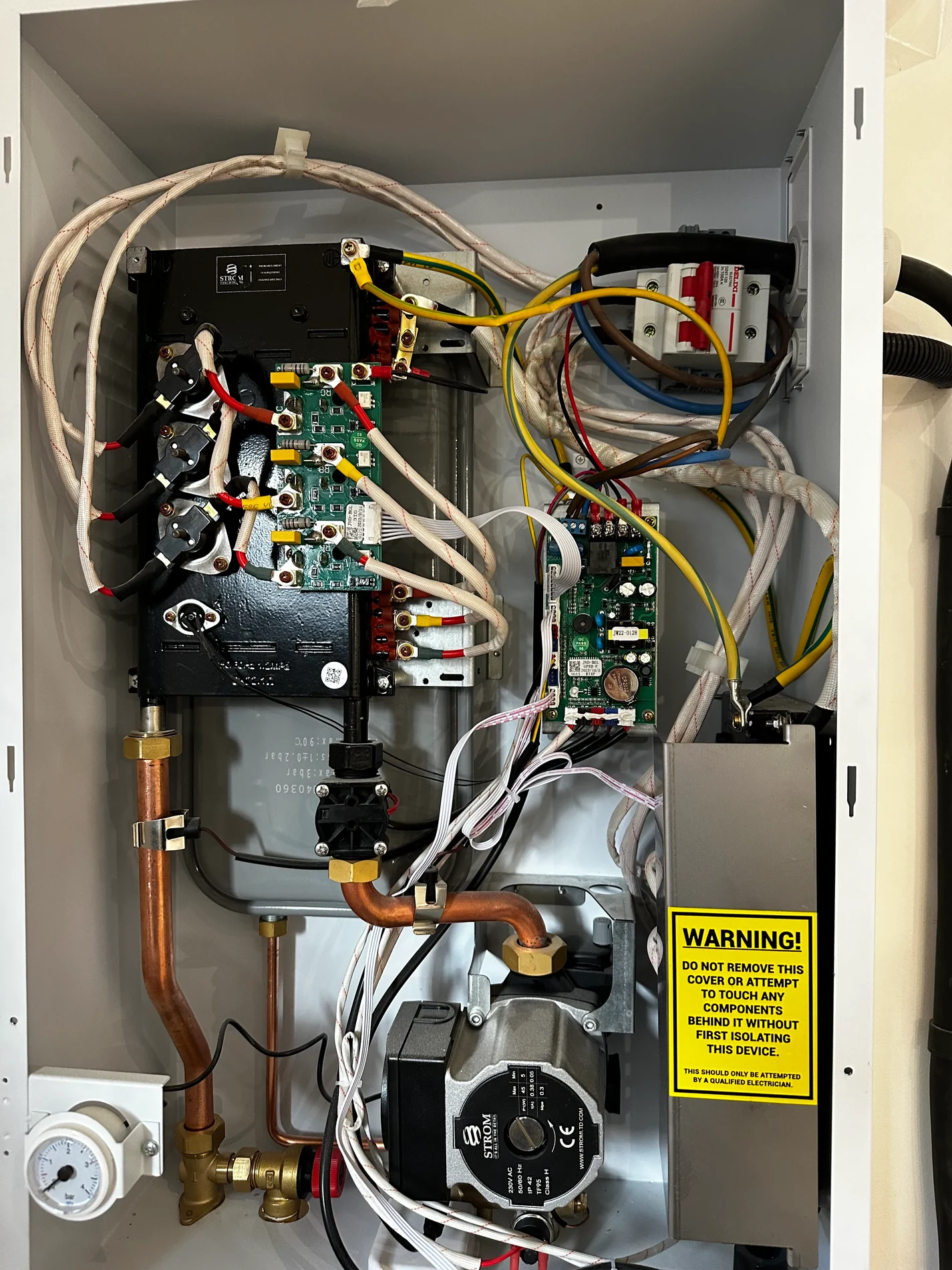
The smell of burning in an electrical context is not always dramatic. It can be a faint background odour, most noticeable when sockets are in use. Common descriptions: acrid plastic, burning rubber, hot metal, faint singeing, sulphurous or rotten egg smell (from arcing). It may be constant or only appear when a circuit is loaded. Either way, it needs investigating before it gets worse.
Common Causes of Electrical Burning Smells
How Entigen Diagnoses an Electrical Burning Fault
When we attend a burning smell call, we treat it as a safety investigation first and a repair second. The priority is establishing whether there is immediate danger and whether the installation can be safely re-energised.
Burning Smell FAQs
Related electrical fault help
If your issue sounds similar, these pages may help you understand the fault before getting in touch.
Burning Smell from an Electrical Accessory or Consumer Unit?
Don't wait and see. Turn off the circuit and contact us. We'll attend promptly, diagnose the fault properly, and make the installation safe before anything else is reconnected.
If in doubt, turn off at the mains · Call Entigen for urgent assessment