
Light Not Working or Flickering?
A flickering light is easy to ignore. A light that's stopped working is easy to assume is just a bulb. But both can point to wiring faults that get worse over time — and in some cases, are genuinely dangerous. Let us find the real cause.
What a Flickering or Dead Light Usually Means
When a light stops working or starts flickering, the instinct is usually to change the bulb. Sometimes that's all it is. But if the problem persists, or if it's affecting multiple fittings, the fault is almost certainly somewhere in the wiring — not the lamp.
The location and pattern of the fault tells us a lot before we even open a screwdriver. A single fitting that's completely dead usually points to that fitting, its switch, or its supply cable. A whole lighting circuit that's dropped off means the MCB or RCBO at the consumer unit has tripped, or the circuit has a fault severe enough to cause an overcurrent. Flickering across multiple lights on one circuit — or across the whole property — suggests something further back in the system: loose connections at the consumer unit, a failing main switch, or in rare cases, a problem with the incoming DNO supply.
The pattern matters. That's why we ask questions before we attend, and why we don't start guessing once we arrive.
Common Causes We Check For
In no particular order — the pattern of the fault guides our starting point.
When a Flickering Light Is Not a Minor Inconvenience
Flickering lights are often dismissed because they don't immediately cause harm. But the fault that causes flickering — particularly a loose connection or damaged cable — can generate heat at that point that the circuit protection won't detect until it becomes a more serious fault. Electrical fires in UK homes typically start this way: a loose terminal arcing at low load for weeks or months before it generates enough heat to ignite adjacent material.
Contact Us Today If You Notice:
- Flickering that affects multiple rooms or the whole property simultaneously
- A burning smell, warm switchplate, or discolouration around a fitting or switch
- A buzzing or crackling sound from a fitting, switch, or consumer unit
- The MCB or RCBO keeps tripping every time you reset it
- A light that stopped working in a bathroom or kitchen where water may be involved
- Any flickering in a property with older rubber-insulated wiring
- Flickering that gets worse when other heavy appliances come on
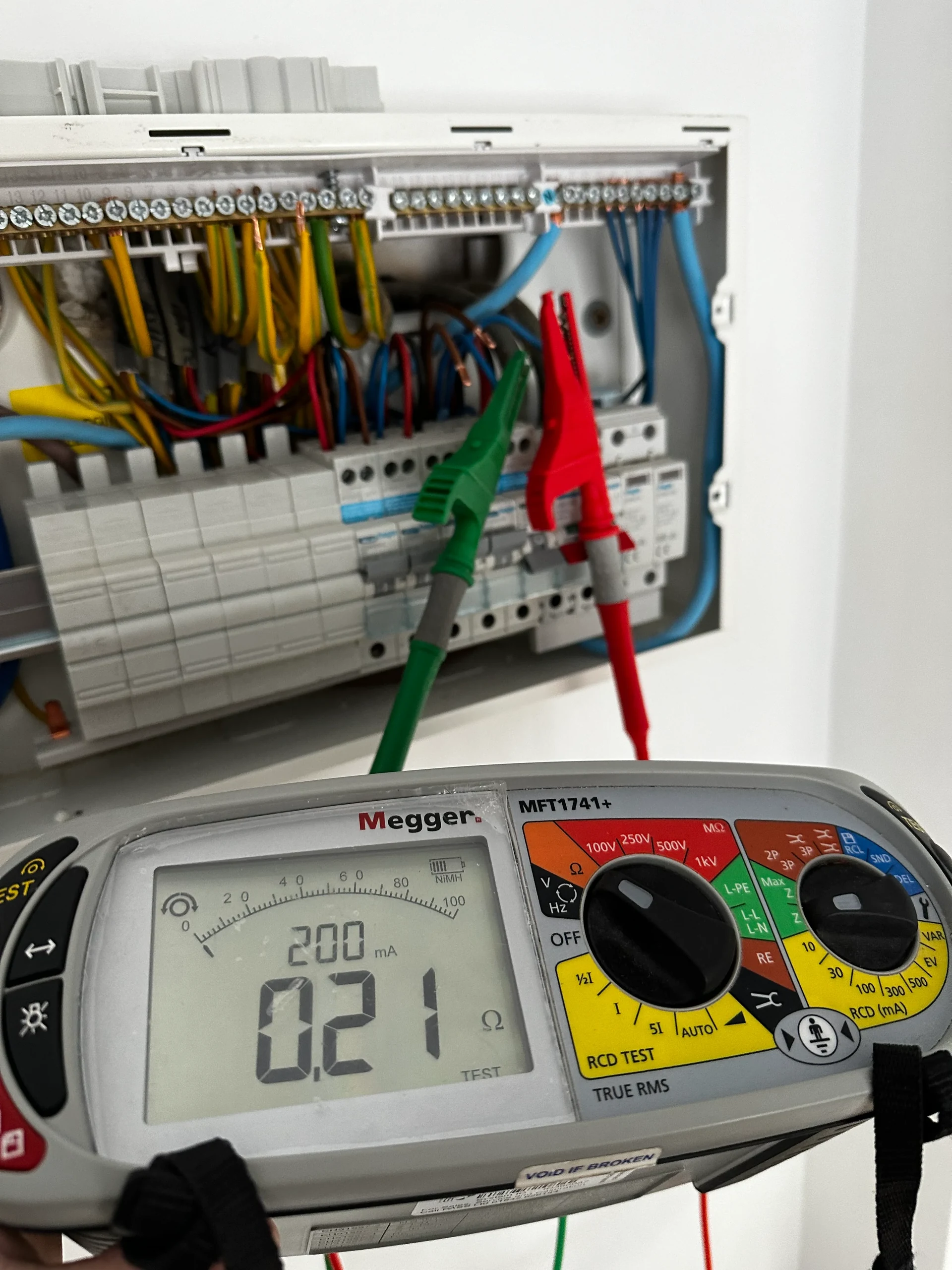
How Entigen Diagnoses a Lighting Fault
Areas We Cover for Lighting Faults
We cover Kettering and the surrounding Northamptonshire area including Barton Seagrave, Burton Latimer, Corby, Wellingborough, Northampton, Earls Barton, Rushden, Desborough, Rothwell and surrounding towns and villages.
Lighting Fault FAQs
Related electrical fault help
If your issue sounds similar, these pages may help you understand the fault before getting in touch.
Got a Lighting Fault in Kettering or Northamptonshire?
Don't leave a flickering light until it becomes a bigger problem. We'll find the root cause — properly, with test equipment — and fix it right first time.
Mon–Fri 8:30–16:30 · NAPIT Registered · Cost Confirmed Before Attendance