
Fuse Box Burning Smell · Hot Consumer Unit · Kettering

Overheating Consumer Unit Needs Urgent Attention

A consumer unit getting hot, smelling of burning plastic, showing discolouration or making crackling noises is not a watch-and-wait problem. If there is obvious heat or damage, switch off the supply if safe to do so and call a qualified electrician urgently.

Heat
Check the Signs
Off
Isolate If Safe
Test
Fault Diagnosis
Plan
Repair or Replace
NAPIT Registered
Consumer Unit Faults
Attendance Subject to Availability
Fixed Pricing
Safe Repair Options
Warm or Smelling Fuse Board?

If your consumer unit is getting hot, smelling odd, buzzing or tripping repeatedly, start with safe triage. Do not remove the cover, inspect live parts or keep resetting breakers.

Step 1 — Free Instant Guidance
ZAPLINE
Don’t guess — find out in 60 seconds

Zapline gives homeowners instant triage during electrical and home emergencies — helping you understand what’s happening, reduce immediate risk and take the right next step.

How it works
1Answer a few quick questions — takes under 60 seconds
2Get instant guidance on what’s likely happening
3Decide whether to call out now or book in later

No sign-up. No obligation. Just clear guidance.

Used by homeowners across Kettering & Northamptonshire.

Most homeowners start here before calling an electrician.

Step 2 — if you need an electrician after your diagnosis, call or WhatsApp Entigen directly.

Get Instant Guidance
Powered by Zapline
Consumer Unit Overheating

Warm Equipment and Dangerous Heat Are Not the Same Thing

Some electrical components may feel mildly warm under load. That can be normal where several circuits are in use and current is flowing through protective devices. What is not normal is a fuse box burning smell, a hot main switch or RCBO, discolouration around a breaker, warm meter tails, crackling noises or heat that is obvious through the consumer unit front.

If you are searching for an overheating consumer unit, consumer unit getting hot, warm consumer unit electrician or consumer unit overheating electrician Kettering service, the first step is to treat it seriously and keep the board out of casual use until it has been checked properly.

Overheating often points to a high-resistance connection, damaged protective device, poor previous installation work or wider board deterioration. It is not something to investigate by removing covers or touching cables.
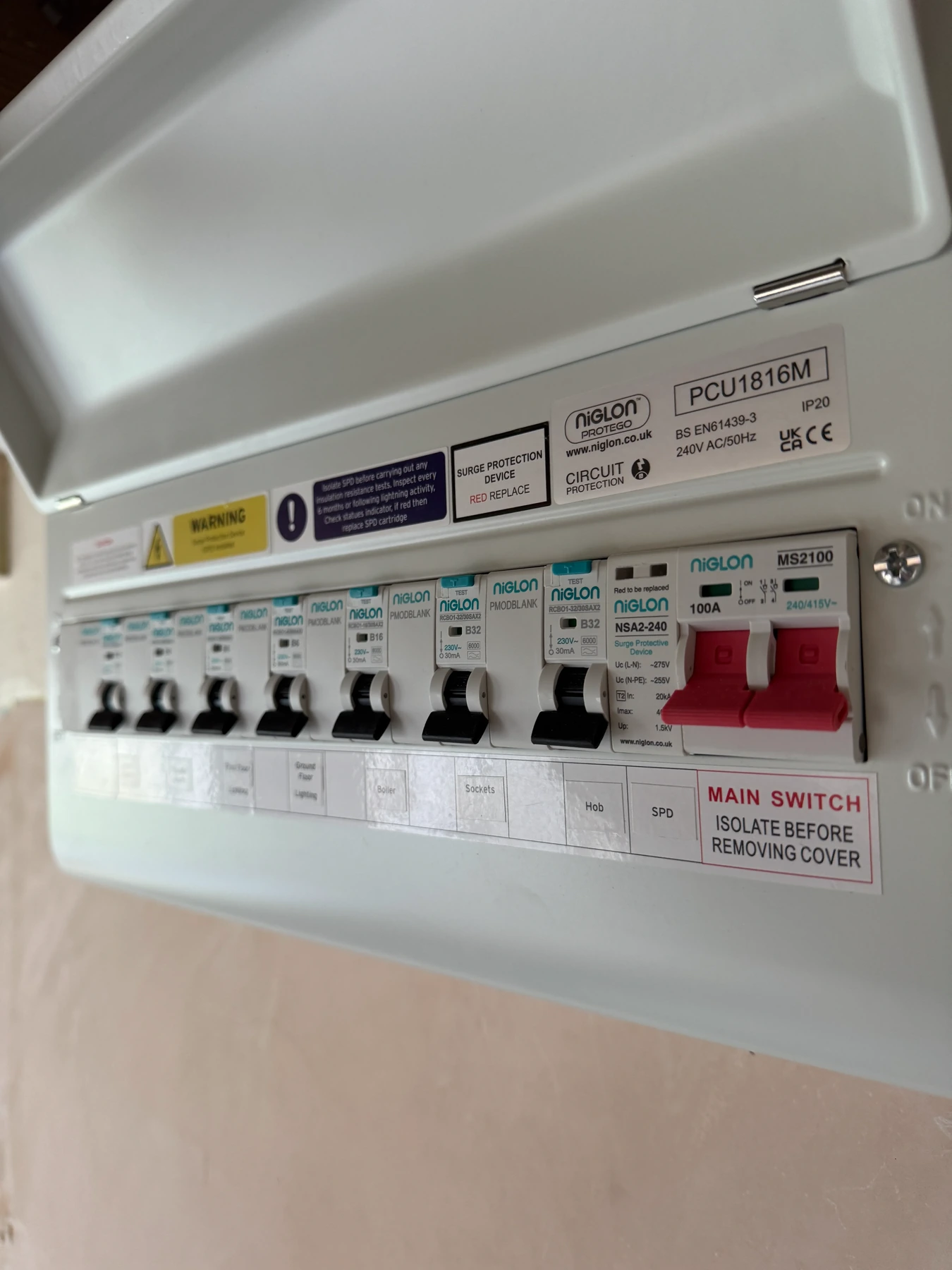
Consumer unit inspection and electrical testing in Kettering
Mildly Warm
A consumer unit or breaker may feel slightly warm when the installation is under normal load, especially if several circuits are running. Warmth on its own is not the same as smell, localised hot spots, damaged plastic or instability.
Dangerously Hot
Burning smell, fishy or plastic smell, visible discolouration, scorch marks, buzzing, crackling, hot tails, a hot main switch, flickering power, intermittent faults or repeated tripping all point to a fault that needs urgent assessment.
Warning Signs

Signs an Overheating Consumer Unit Is Not Normal

Smell
Burning smell from fuse box positions, fishy smell, hot plastic smell or acrid electrical odours are not normal.
Visible Damage
Discolouration, browning, melting, scorch marks or distortion around breakers, main switches or tails are serious warning signs.
Sound
Buzzing, crackling or sizzling near the board can point to loose or damaged connections and should not be ignored.
Hot Devices
A hot main switch, RCD, MCB or RCBO suggests a specific fault point rather than harmless general warmth.
Hot Cables
Warm or hot meter tails and cables can indicate overload, loose terminations, undersized conductors or damage.
Fault Behaviour
Flickering power, intermittent faults and repeated tripping often appear alongside overheating when damage is already progressing.
Common Causes

Why Consumer Units Overheat

Loose terminationsLoose connections create resistance, and resistance creates heat. This is one of the most common reasons boards overheat.
Overloaded circuitsHeavy loads, poorly distributed circuits or unsuitable historic arrangements can push devices and tails harder than intended.
Undersized cablesCables that are too small for the installed load or protective device can overheat over time, especially at termination points.
Moisture and corrosionDamp meter cupboards, condensation or historic leaks can corrode metal parts and create unstable high-resistance joints.
Ageing boards and damaged busbarsOlder consumer units, damaged busbars, tired protective devices and historic heat damage often make repair less straightforward.
Poor previous workIncorrect torque, mixed devices, unsuitable accessories or untidy earlier alterations can all leave a board vulnerable to overheating.
What to Do Immediately
  1. 1
    If there is burning smell, smoke, scorch marks, crackling or obvious heat, switch off the supply if safe to do so.
  2. 2
    Do not remove the consumer unit cover. Do not try to inspect live parts, terminations or busbars yourself.
  3. 3
    Do not keep resetting breakers. Repeated trips may be a symptom of the same heat-related fault.
  4. 4
    Keep people away from the board and avoid touching hot cables, meter tails or adjacent equipment.
  5. 5
    Call a qualified electrician urgently. If there is smoke or fire, contact emergency services.
Incoming Equipment

When DNO or Meter Operator Involvement May Be Needed

If heat or damage appears around the service head, cut-out, meter or incoming supply equipment, the issue may not sit entirely within the customer-owned installation. In those cases the DNO or meter operator may need to be involved.

Entigen can assess customer-owned equipment where safely accessible and explain what appears to be happening, but we do not repair DNO service heads, cut-out fuses or metering equipment. The right route depends on where the heat and damage are located.

Related Safety Guide

If the main symptom is smell rather than visible heat, our burning smell from socket page explains why smell alone can still point to serious overheating.

Repair or Replace

Why Overheating Often Leads to Replacement

Not every overheating consumer unit must be replaced, but replacement is often likely where there is thermal damage, ageing equipment, damaged busbars, unsuitable protection or signs that the board is no longer safe as a long-term repair candidate.

A single isolated issue may sometimes be repairable if the surrounding board is sound and there is no wider heat damage. Once plastic enclosures, main switches, RCBOs, tails or internal copperwork have been heat-affected, the sensible route is often to replace rather than patch.

What We Check

An electrician checks load, cable sizes, terminations where safely accessible, protective devices, signs of thermal damage, earthing and bonding, RCD or RCBO protection, and whether the board is a realistic repair candidate or should be replaced.

01
Assess the Heat Signs
We identify which area appears hottest and whether smell, discolouration, tails, breakers or the main switch are involved.
02
Review Load and Circuits
Circuit loading and likely demand are reviewed to understand whether overload or imbalance may be contributing.
03
Check Accessible Components
Where safe and appropriate, accessible customer-owned parts are checked for high-resistance connections, damage and suitability.
04
Decide Repair or Replacement
We explain clearly whether the issue appears isolated or whether the safer long-term route is consumer unit replacement.
When to Call

When to Call a Qualified Electrician Urgently

Call urgently if the board smells hot, feels obviously hot, is making unusual noise, shows scorch marks, has flickering power, trips repeatedly, or you can see signs of heat around tails or breakers. A fuse box burning smell should be treated seriously even before visible damage appears.

Attendance depends on workload, urgency, access and location. When you contact us, tell us what smells hot, whether anything has tripped, whether the heat is around the main switch or tails, and whether there is visible damage.

No DIY Inspection

Do not touch meter tails, service heads, sealed equipment or anything that may be live. If the safest option is to isolate and wait for help, that is the right move.

Common Questions

Overheating Consumer Unit FAQs

Some components can feel mildly warm under load, especially when several circuits are in use. That is very different from a board, breaker, main switch or cable that feels hot, smells of burning plastic, shows discolouration or trips repeatedly. Heat that is noticeable, localised or accompanied by other warning signs needs urgent attention.
Common causes include loose terminations, overloaded circuits, undersized cables, poor previous installation work, ageing consumer units, damaged busbars or protective devices, moisture or corrosion, and high-resistance connections. The fault may be inside the board or around incoming supply equipment.
If there is burning smell, smoke, scorch marks, crackling or obvious heat, switch off the supply if it is safe to do so and keep clear of the board. Do not remove the cover, do not touch live parts and do not keep resetting breakers. If there is smoke or fire, contact emergency services.
An overheating consumer unit should be treated as urgent, especially if there is smell, visible damage, buzzing, repeated tripping or hot cables. Attendance depends on workload, urgency, access and location, but this is not a fault to leave for convenience.
Sometimes a fault can be repaired if the issue is isolated and there is no wider board damage, but replacement is often likely where there is thermal damage, age, unsafe equipment, damaged busbars or unsuitable protection. The right answer depends on what has actually overheated.
Fault Support

If your issue sounds similar, these pages may help you understand the fault before getting in touch.

Consumer Unit Getting Hot in Kettering?

Tell us what you have noticed: smell, heat, tripping, buzzing, visible marks, and whether the warmth seems to be around the main switch, tails or one breaker. Photos help us advise the next safe step before attending.

Mon–Fri 8:30–16:30 · NAPIT Registered · Serving Kettering and Northamptonshire