
Mains Power Loss and No Power in the Whole House?
If every light, socket and appliance is off, the first job is to work out whether the fault is the local electricity network, the meter/service equipment, or your internal installation. Some faults need your network operator, while others need a qualified electrician.
If you are unsure whether the power loss is an internal fault or a wider network outage, start with safe triage before touching anything at the consumer unit.
Zapline gives homeowners instant triage during electrical and home emergencies — helping you understand what’s happening, reduce immediate risk and take the right next step.
No sign-up. No obligation. Just clear guidance.
Most homeowners start here before calling an electrician.
Step 2 — if you need an electrician after your diagnosis, call or WhatsApp Entigen directly.
Complete Mains Power Loss Is Different From a Partial Power Fault
A full mains power loss means the whole property has no usable electrical supply. Lights are off, sockets are dead, fixed appliances are off and the consumer unit may appear to have no live circuits at all. When the power has gone off across the whole house, customers often describe it as a mains electricity failure or complete power cut. That is different from power loss in part of the house, where one circuit, one floor or one area has failed but other parts of the installation still work.
The distinction matters because a partial fault is usually inside the property. A complete power cut can be outside your property altogether: a local network outage, a fault on the incoming supply cable, a service head issue, a cut-out fuse problem, a meter problem, or an internal consumer unit/main switch issue.
Entigen can test and repair customer-owned internal electrical faults, such as consumer unit problems, main switch/RCD issues and damaged circuits. We cannot repair DNO service heads, incoming supply cables, cut-out fuses or metering equipment unless authorised by the relevant provider.
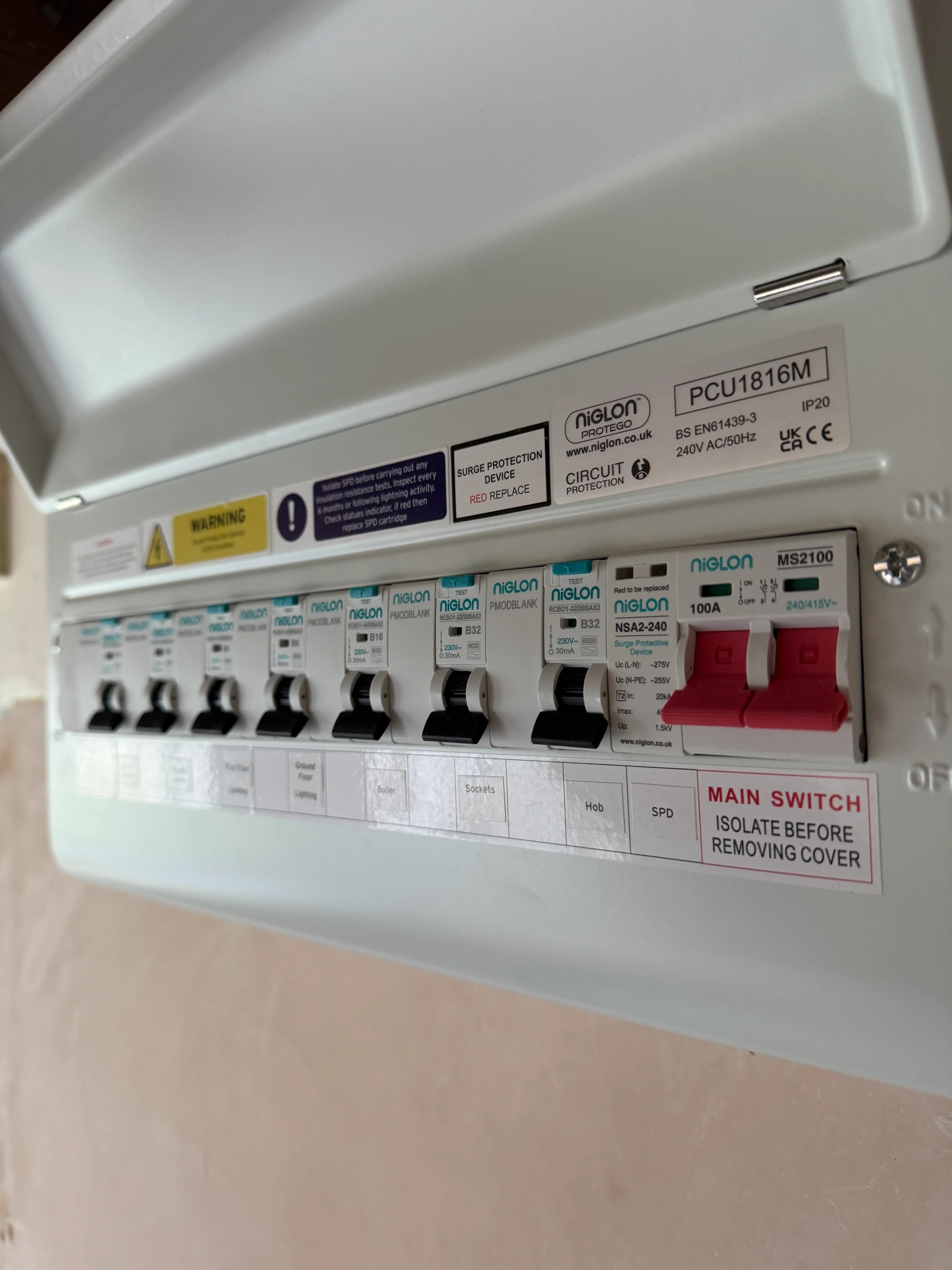
If neighbours, street lights or nearby shops are also without power, call 105. That connects you to the correct electricity network operator for your area. An electrician cannot repair a wider network fault, incoming supply cable fault, service head fault or DNO cut-out issue.
If the surrounding properties still have power, the problem may be at your meter, main isolator, consumer unit, main switch, RCD or internal installation. Check only what you can see safely. Do not open covers or touch sealed equipment.
Is It Your Property or the Electricity Network?
The safest first step is observation, not dismantling. Stand back and check what is affected. If the whole road is dark, your supplier app reports an outage, or several neighbours are affected, the fault is likely outside your installation. In that situation, call 105 or check your network operator’s power cut map.
If the local area has power but your home or business does not, the issue may be closer to your property. That can include a tripped main switch, failed RCD, consumer unit fault, damaged internal circuit, loose or burnt termination inside customer-owned equipment, or a problem with the meter/service equipment that needs the meter operator or DNO.
Your electricity supplier sends the bill. The network operator owns and maintains the local electricity network. For suspected power cuts, the UK route is 105, even if you are not sure who your network operator is.
Signs This Is Not Just One Failed Circuit
- 1Check nearby properties. Ask a neighbour, look for local street lighting, or check whether nearby homes and shops appear affected.
- 2Look at the meter display. Check whether the meter, smart meter or in-home display shows power. Do not remove covers or touch sealed terminals.
- 3Look at the consumer unit. From outside the cover, check whether the main switch, RCD or RCBOs appear off or tripped.
- 4Watch for warning signs. Burning smell, heat, buzzing, scorch marks, water ingress or visible damage means stop and seek qualified help.
- 5Call 105 if the area is affected. If the network looks down, 105 is the correct UK power cut number.
What You Should Not Open or Handle
Never pull the DNO fuse, remove meter seals, open the service head, handle meter tails or remove covers from supply equipment. Those parts can remain live even when the property appears to have no power, and some are legally controlled by the network operator or meter operator.
- Do not touch the service head or cut-out fuse.
- Do not move, loosen or handle meter tails.
- Do not remove sealed meter or DNO covers.
- Do not open a consumer unit cover to investigate live parts.
- Do not keep resetting a main switch or RCD that will not hold.
Keep away from the equipment, keep others away, and seek urgent advice. Heat, buzzing, melting plastic, scorch marks or smoke around meters, isolators or consumer units should not be investigated by opening covers.
What an Electrician Can Repair
Where the fault is inside your installation, a qualified electrician can test and repair a range of problems that cause whole-property power loss. That may include a failed main switch, RCD or RCBO issue, consumer unit fault, damaged final circuit, loose or burnt termination inside accessible customer-owned equipment, or a fault that needs circuits isolating and testing one by one.
What an Electrician Cannot Repair
An electrician cannot legally or appropriately repair everything involved in a complete power loss. The DNO service head, incoming supply cable and cut-out fuse are network-side equipment. The electricity meter and some isolators may be the responsibility of the meter operator or supplier.
If the fault is there, the right route is the network operator, meter operator or supplier. For suspected network power cuts, call 105. For meter display faults or metering equipment concerns where the area supply is normal, contact your supplier unless there is immediate danger.
Call 105 or Call an Electrician?
Call 105 if the whole street appears affected, neighbours have also lost power, the meter display is blank during a local outage, you suspect an incoming supply issue, or there are signs of damage around the service head/cut-out equipment. 105 connects you to the correct UK network operator.
If neighbouring properties have power and the issue appears internal, contact Entigen. Attendance depends on workload, urgency, access and location, but we can help decide whether an electrician, your supplier or the DNO is the correct next step.
Mains Power Loss FAQs
Related electrical fault help
If your issue sounds similar, these pages may help you understand the fault before getting in touch.
Whole Property Without Power? Start With the Right Call.
If neighbours are also affected, call 105 for the network operator. If the local area has power but your property does not, contact Entigen and we will help identify whether the issue is internal, metering-related or supply-side.
Mon–Fri 8:30–16:30 · NAPIT Registered · Serving Kettering and Northamptonshire