
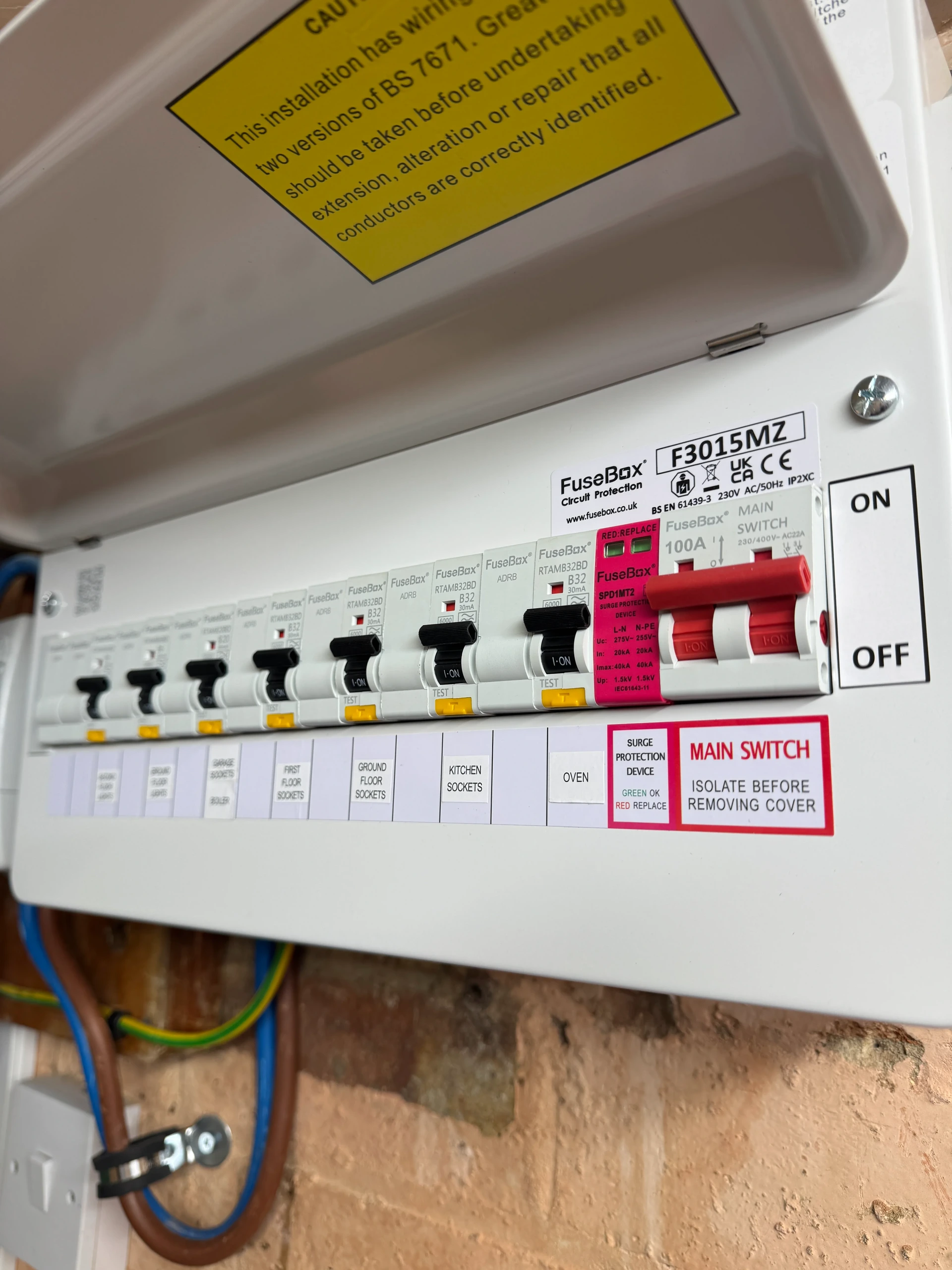
Garage and Shed Power Issues Diagnosed Properly
Lost power to a garage or shed? Outbuilding faults can involve the house supply, sub-main, SWA cable, garage consumer unit, sockets, lights, RCD protection or high-load equipment. We test the system before adding sockets, replacing parts or reconnecting anything.
If the garage or shed supply is tripping, wet, buzzing, damaged or overloaded, start with safe triage before opening accessories or trying repeated resets.
Zapline gives homeowners instant triage during electrical and home emergencies — helping you understand what’s happening, reduce immediate risk and take the right next step.
No sign-up. No obligation. Just clear guidance.
Most homeowners start here before calling an electrician.
Step 2 — if you need an electrician after your diagnosis, call or WhatsApp Entigen directly.
Garage and Shed Electrics Need More Than a Spare Socket
Garages and sheds are often treated as simple add-ons, but the electrical design matters. The supply may run from a dedicated sub-main, from a garage consumer unit, or from an existing house circuit where that is suitable. Each option has different limits for loading, RCD protection, cable route, earthing and future use.
A garage with sockets, lights, tools, heaters, a tumble dryer, freezer or garden equipment is very different from a small shed light. Adding more sockets is not always just a case of spurring another socket, especially where the existing supply is already close to its limits or the route to the outbuilding is unknown.
Entigen helps homeowners in Kettering and Northamptonshire diagnose garage power issues, shed power not working, tripping and unsafe outbuilding supplies without guessing at cable sizes, breaker ratings or burial depths. If you have a shed electricity fault or garage lost power problem, the supply needs checking as a system.
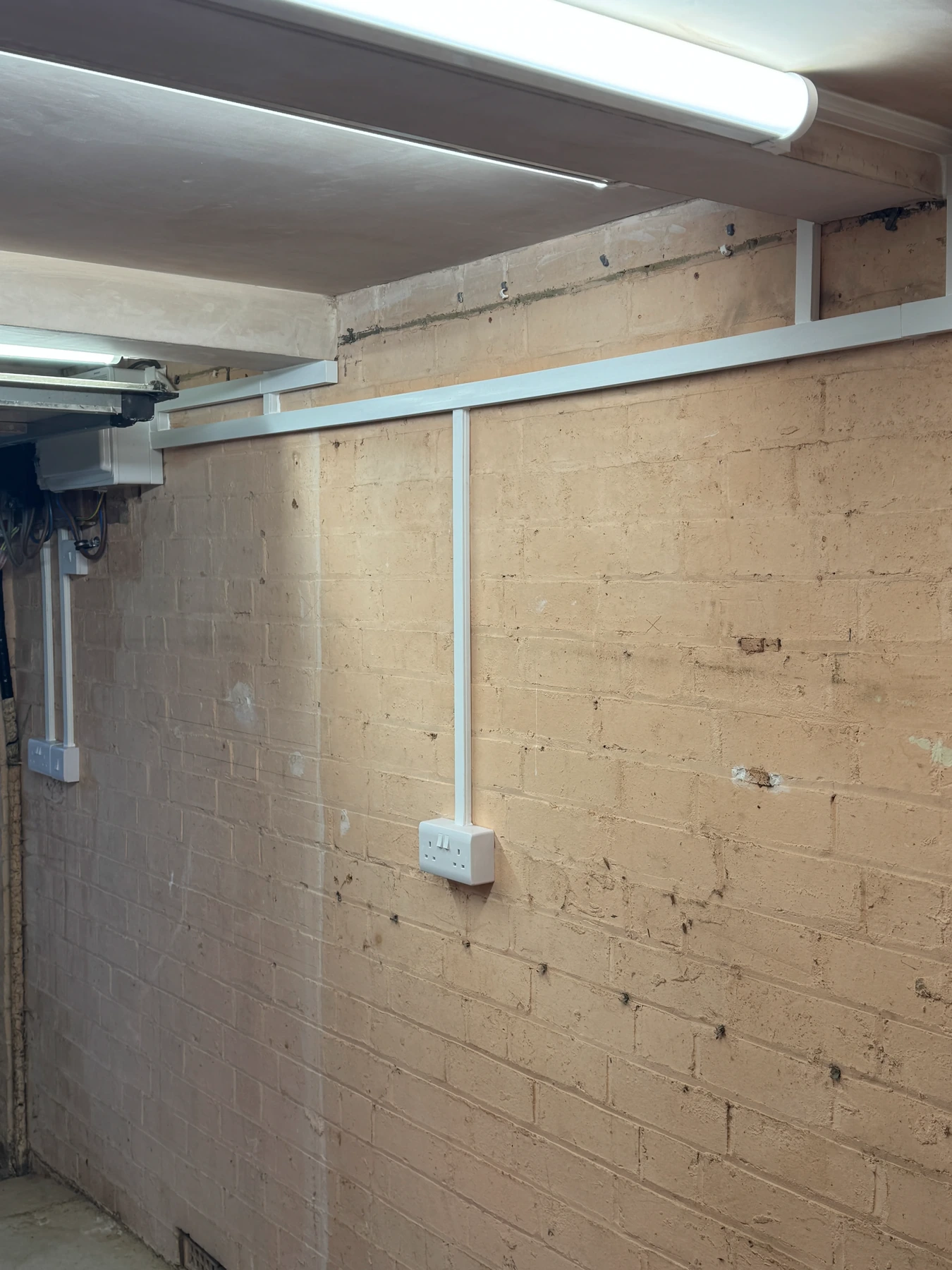
Outbuilding Supplies Explained
Some garages and sheds are supplied by a dedicated sub-main from the house consumer unit. This can be appropriate where the outbuilding needs several sockets, lighting, equipment loads or a small consumer unit of its own. The sub-main design must consider cable size, protective device, installation method, route length, earthing and how the outbuilding will be used.
Other smaller outbuildings may be supplied from an existing house circuit if the circuit is suitable and the added load is modest. That decision cannot be made from the number of sockets alone. The existing circuit condition, protective device, RCD protection, cable route and likely load all need checking.
A small garage consumer unit can be useful where sockets and lighting need separate protection, but an outbuilding does not automatically need one. Where fitted, it must suit the environment and be protected from damp, dust, knocks and mechanical damage.
Why Outbuilding RCD Protection Matters
Garages and sheds are often damp, dusty and exposed to tougher use than rooms inside the house. Sockets may supply garden tools, extension leads, freezers, battery chargers, pressure washers or heaters. Suitable RCD or RCBO protection is important because faults can involve external cables, wet floors, metal equipment and portable appliances.
If an outbuilding RCD keeps tripping, do not keep resetting it. The fault may be moisture damage, overload, damaged cable, loose connections or equipment failure. See also our guide to RCDs that keep tripping.
Why Garage and Shed Power Fails
External and Buried Cable Considerations
Outbuilding supplies often use SWA cable where mechanical protection and external routing are needed, but the correct cable and route depend on the job. Some routes are clipped externally, some run through conduit or trunking, and some are buried across gardens, paths or driveways.
There is no single magic depth that applies to every garage or shed supply. Burial depth depends on the route, ground use, risk of disturbance, mechanical protection, marking tape, cable type and design. Buried cables should be suitably protected, routed and marked to reduce the chance of future damage.
If you suspect the outbuilding cable has been damaged, switch off the affected supply if safe and do not dig around it while energised. The route should be identified and tested before repair work starts.
How We Diagnose Outbuilding Power Faults
Why More Garage Sockets Need Design Checks
It is common to need more sockets in a garage: battery chargers, tool benches, freezers, tumble dryers, lighting controls, garden equipment and occasional outdoor work. The problem is that each new socket increases the chance the existing supply will be used harder than originally intended.
Before adding sockets, an electrician needs to check the supply cable, protective device, RCD protection, earthing arrangement, voltage drop, garage consumer unit condition and likely load. A simple extra socket may be fine on one installation and inappropriate on another.
Is Outbuilding Electrical Work Notifiable?
Not all garage or shed electrical work is automatically Part P notifiable. Like-for-like repairs and minor work can be different from a new circuit, new outbuilding supply or significant alteration to fixed wiring.
New circuits, outbuilding supplies and certain alterations may require notification depending on the work. We will explain the likely certification and notification route before carrying out the job.
- 1Turn off the affected circuit if there is water ingress, burning smell, tripping, buzzing, heat or visible damage.
- 2Do not keep resetting an RCD that trips when the garage or shed supply is switched on.
- 3Unplug high-load appliances such as heaters, tumble dryers, freezers, chargers and power tools before checking whether overload may be involved.
- 4Do not dig near suspected buried cables or repair buried cable yourself. Isolate the supply and arrange proper testing.
- 5Call a qualified electrician if the fault involves SWA cable, a garage consumer unit, repeated tripping, moisture, damaged accessories or fixed wiring.
When a Garage or Shed Power Fault Needs an Electrician
Call a qualified electrician if the garage has lost power, the shed supply trips, the RCD will not reset, sockets are damaged, lights flicker, the garage consumer unit is damp or corroded, or the SWA/external cable may have been damaged.
Attendance depends on workload, urgency, access and location. If the outbuilding supply can be safely isolated and made safe, we can plan investigation. If there is burning smell, visible damage, exposed conductors, water in equipment or repeated tripping, stop using it and contact us for advice.
Garage and Shed Power FAQs
Related electrical fault help
If your issue sounds similar, these pages may help you understand the fault before getting in touch.
Garage or Shed Power Fault in Kettering?
Tell us what has stopped working, whether the RCD trips, what equipment is connected, and whether there has been water, digging or recent DIY work near the supply. We will confirm the practical next step before attending.
Mon–Fri 8:30–16:30 · NAPIT Registered · Serving Kettering and Northamptonshire